







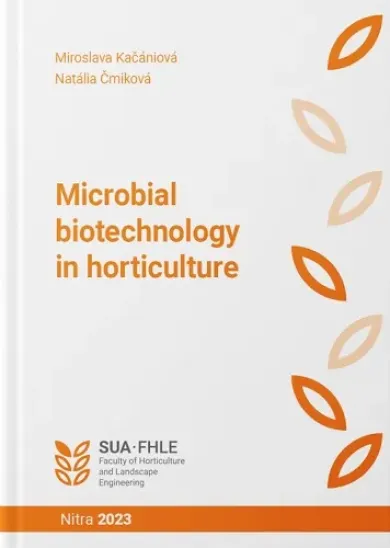
Miroslava Kačániová, Natália Čmiková
Microbial biotechnology in horticulture
Microorganisms perform a variety of roles on our planet, most of which are important to make the Earth a habitable and sustainable ecosystem. Many properties of microorganisms are used as low input biotechnology to address various problems related to environment, food security, nutrition, biodegradation, bioremediation, sustainable agriculture, bioenergy and biofuels, bioindustries including microbial enzymes/extremozymes, probiotics etc. Teaching texts cover broader aspects and reveal the role of micro-organisms in achieving a sustainable world. They focus on various microbial technologies related to ecosystem sustenance and achieving the Sustainable Development Goals. Microbial Biotechnology provides information on microorganism-based technologies for replacing harmful chemicals in agriculture, green alternatives to fossil fuels, use of microorganisms for reclamation ofwastelands/stressed regions, bioremediation of contaminated habitats, biodegradation purposes. Microbial biotechnology also focuses on the use of microorganisms for various industrial purposes including enzymes, extremophile microorganisms and enzymes, wastewater treatment, food products. Microbial Biotechnology focuses on current topics related to microbial technology from all parts of the world, identifying the key role of microorganisms in sustaining ecosystems. The application of microbial biotechnology in horticulture is of great importance as it has the potential to increase productivity, improve product quality and shelf life, control diseases and pests, and develop new techniques in food processing. In addition, the use of microbial technology in horticulture encompasses a variety of scientific activities, including the application of biological nitrogen (N2 ) fixation agents in vegetable legumes, biofertilizers, microbial pesticides, and microbial biological control agents against plant pathogens. In addition, microbial systems can be used for bioconversion of plant materials, such as systems for biomass and biofuel production, for bioprocessing of fermented foods and beverages, for protein enrichment in horticultural waste products for use in animal feed, for the production of microbial enzymes needed in horticulture, in industry and as tools for the construction of transgenic plants.


Microorganisms perform a variety of roles on our planet, most of which are important to make the Earth a habitable and sustainable ecosystem. Many properties of microorganisms are used as low input biotechnology to address various problems related to environment, food security, nutrition, biodegradation, bioremediation, sustainable agriculture, bioenergy and biofuels, bioindustries including microbial enzymes/extremozymes, probiotics etc. Teaching texts cover broader aspects and reveal the role of micro-organisms in achieving a sustainable world. They focus on various microbial technologies related to ecosystem sustenance and achieving the Sustainable Development Goals. Microbial Biotechnology provides information on microorganism-based technologies for replacing harmful chemicals in agriculture, green alternatives to fossil fuels, use of microorganisms for reclamation ofwastelands/stressed regions, bioremediation of contaminated habitats, biodegradation purposes. Microbial biotechnology also focuses on the use of microorganisms for various industrial purposes including enzymes, extremophile microorganisms and enzymes, wastewater treatment, food products. Microbial Biotechnology focuses on current topics related to microbial technology from all parts of the world, identifying the key role of microorganisms in sustaining ecosystems. The application of microbial biotechnology in horticulture is of great importance as it has the potential to increase productivity, improve product quality and shelf life, control diseases and pests, and develop new techniques in food processing. In addition, the use of microbial technology in horticulture encompasses a variety of scientific activities, including the application of biological nitrogen (N2 ) fixation agents in vegetable legumes, biofertilizers, microbial pesticides, and microbial biological control agents against plant pathogens. In addition, microbial systems can be used for bioconversion of plant materials, such as systems for biomass and biofuel production, for bioprocessing of fermented foods and beverages, for protein enrichment in horticultural waste products for use in animal feed, for the production of microbial enzymes needed in horticulture, in industry and as tools for the construction of transgenic plants.
| Jazyk | anglický |
| Vydavateľ | Slovenská poľnohospodárska univerzita v Nitre |
| Rok vydania | 2023 |
| Počet strán | 218 |
| Typ viazania | brožovaná |
| Hmotnosť (g) | 574 g |
| Rozmery (š-v-h) | 295x210 |
| EAN | 9788055226682 |
| Dodacia doba | nedostupné |
Dalšie obľúbené tituly z kategórie:


